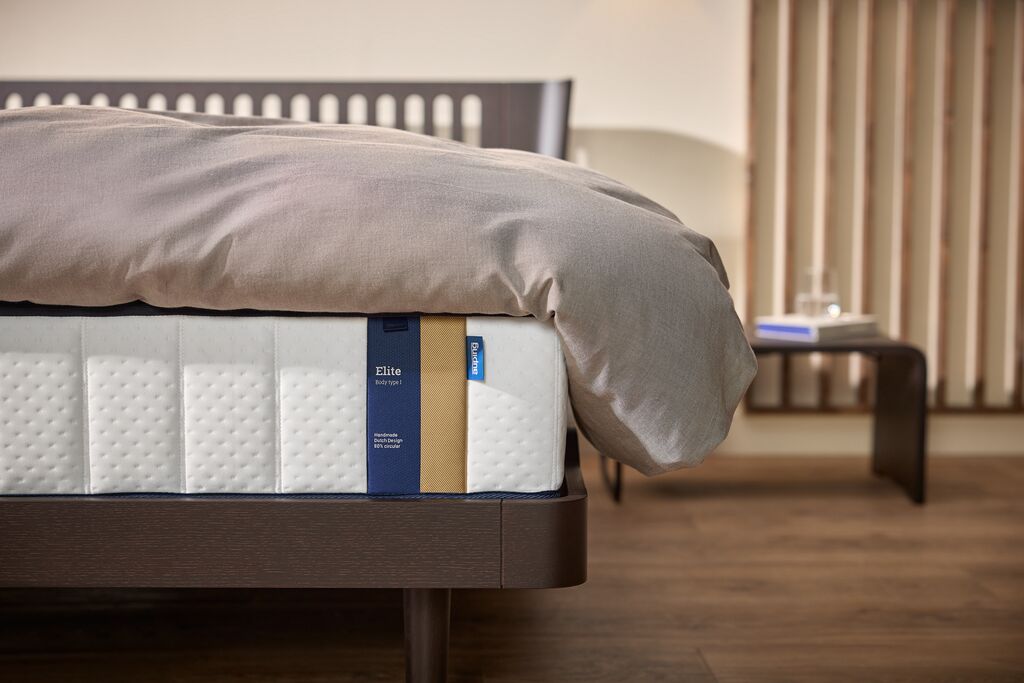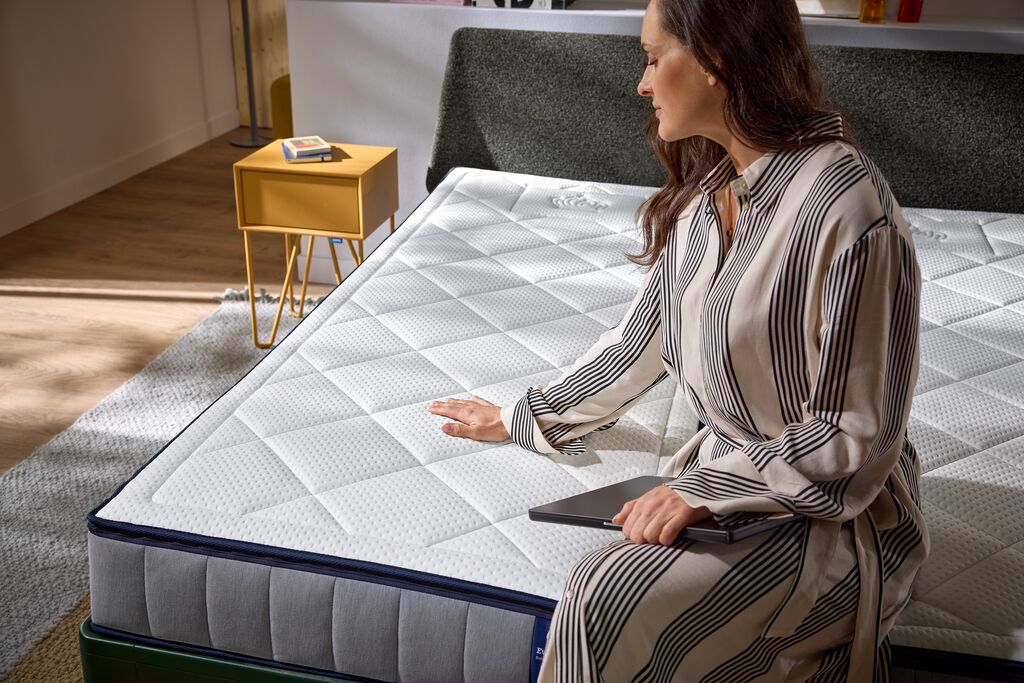
A bed base is the structural foundation that supports the mattress and transfers body weight to the bed frame. It serves two essential functions: providing firm, even support that preserves the mattress’s properties, and enabling ventilation that prevents the buildup of moisture, mold, and dust mites.
Choosing the right bed base is just as important as choosing the mattress: an unsuitable base can cancel out the ergonomic properties of an excellent mattress and even void its warranty.
What is a bed base for?
- Even support: distributes body weight evenly, preventing pressure points and premature mattress deformation.
- Ventilation: by separating the mattress from the floor, it allows heat and body moisture to dissipate every night.
- Hygiene: a dry, well-ventilated mattress is a hostile environment for dust mites, bacteria, and mold, protecting respiratory and skin health.
- Mattress durability: a good bed base extends the mattress’s lifespan; an unsuitable one shortens it drastically.
Types of bed bases: comparison
| Bed base type | Main feature | Ideal for |
|---|---|---|
| Slatted base | Flexible or rigid wooden slats | Versatile value for money |
| Mesh base | Continuous surface with maximum ventilation | Superior ventilation and hygiene |
| Spring base | Traditional elasticity | Increasingly less common |
| Upholstered base / storage bed base | Firm surface + storage | Bedrooms with limited space |
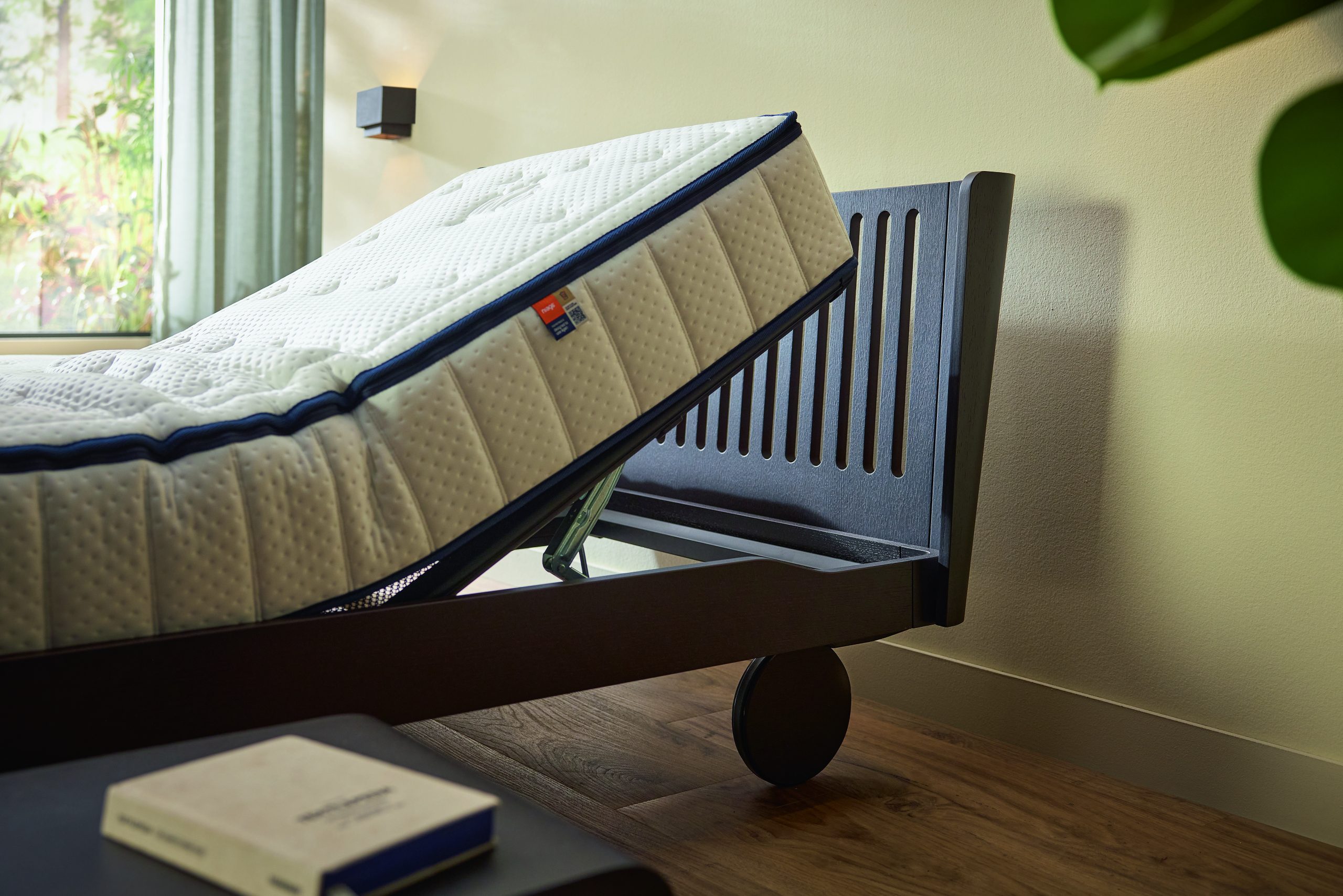
| Adjustable base | Adjustable incline for torso and legs | Ergonomics, reading, reduced mobility |
Slatted base
This is the most widespread type. It consists of slats — usually beechwood for its strength and elasticity — held in rubber caps. Flexible slats adapt to the body’s contours and promote ventilation; rigid slats offer a firmer, more even surface.
Mesh base
This is the oldest technology and, at the same time, the most ventilated one: invented by Johannes Auping in 1888, it remains the foundation of Auping bed bases. Its steel mesh structure offers thousands of support points that adapt to the whole body — not just where a slat sits — leaving around 80% of the surface open to air, compared to the usual 50% in slatted bases. The result: better anatomical adaptation, a cooler and drier mattress, and far greater durability.
Spring base
The interconnected springs transmit movement, making them poor at isolating motion when sleeping as a couple. This system is increasingly falling out of use compared to current alternatives.
Upholstered base and storage bed base
These prioritize aesthetics and storage: the storage bed base includes an internal compartment for bedding. Their weak point is ventilation — the closed surface limits airflow, so it’s best to choose breathable fabrics and air out the mattress frequently.
Adjustable base
This allows you to change the incline of the bed by zone (torso, legs) using manual or electric controls. Adjustable bed bases make reading easier, improve circulation, and are especially useful for people with reduced mobility or back and neck conditions.
How to choose a bed base for your mattress
Compatibility between the bed base and mattress determines how well the whole system performs:
- Latex and memory foam mattresses: need a base with some flexibility (flexible slats or mesh) that allows the foam to mold correctly.
- Pocket spring mattresses: require firm, even support that preserves the internal spring structure.
- Back pain: look for support that keeps the spine continuously aligned across the entire surface, with no unsupported areas.
Important: most manufacturers require a compatible base to maintain the mattress warranty. Sagging caused by an unsuitable bed base is usually not covered.

Bed base maintenance
- Remove dust from slats or mesh every 15 days with a dry cloth or vacuum cleaner.
- Check the rubber caps (on slatted bases) and the connection points with the frame every 6 months: creaking or instability are the first signs of wear.
- Air out the space under the bed to evaporate moisture that seeps through from the mattress.
Frequently asked questions about bed bases
A bed base is an open foundation (slats or mesh) that prioritizes ventilation and technical support. A storage bed base is a closed, upholstered foundation with internal storage space, more aesthetic but less breathable.
A firm, even base that supports the entire mattress surface, such as a mesh base or a slatted base with closely spaced slats. Uneven support prematurely deforms the internal spring structure.
Yes. Most manufacturers require a compatible base: premature sagging caused by incorrect support is not covered by the warranty.
It depends on the material: a slatted base lasts 10 to 15 years if the rubber caps are kept in good condition, while a steel mesh base can last decades — Auping’s come with a 35-year warranty against breakage.
The right bed base transforms your sleep
If your mattress is deforming, trapping moisture, or you notice the bed no longer offers the same support, the problem could be underneath. Discover Auping bed bases with a mesh foundation — maximum ventilation and a 35-year warranty — or visit one of our stores to try them out with a sleep specialist.