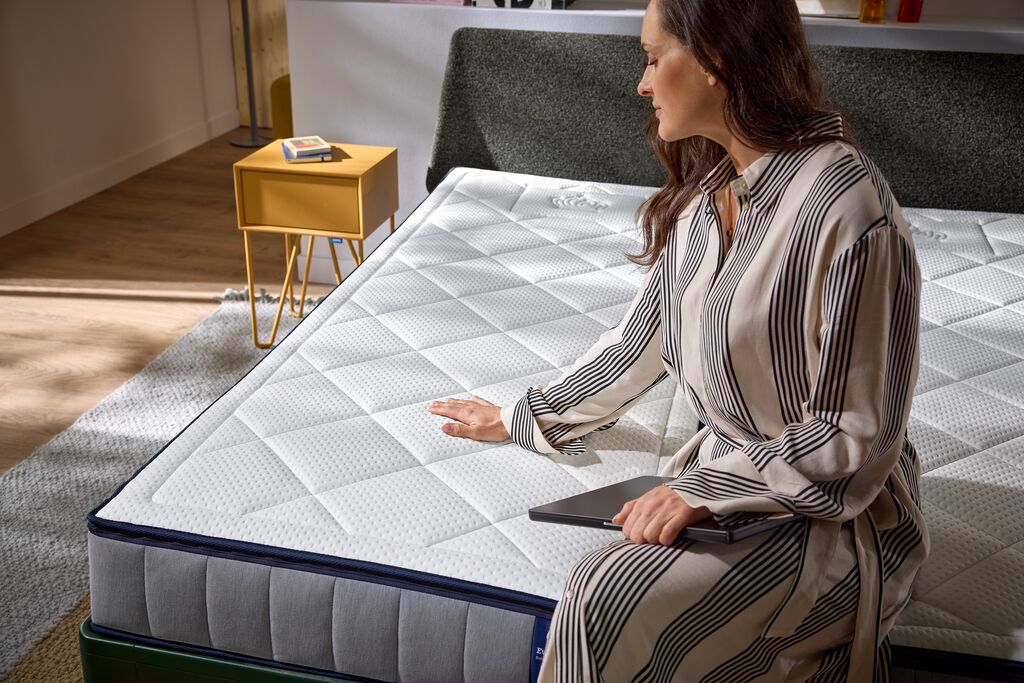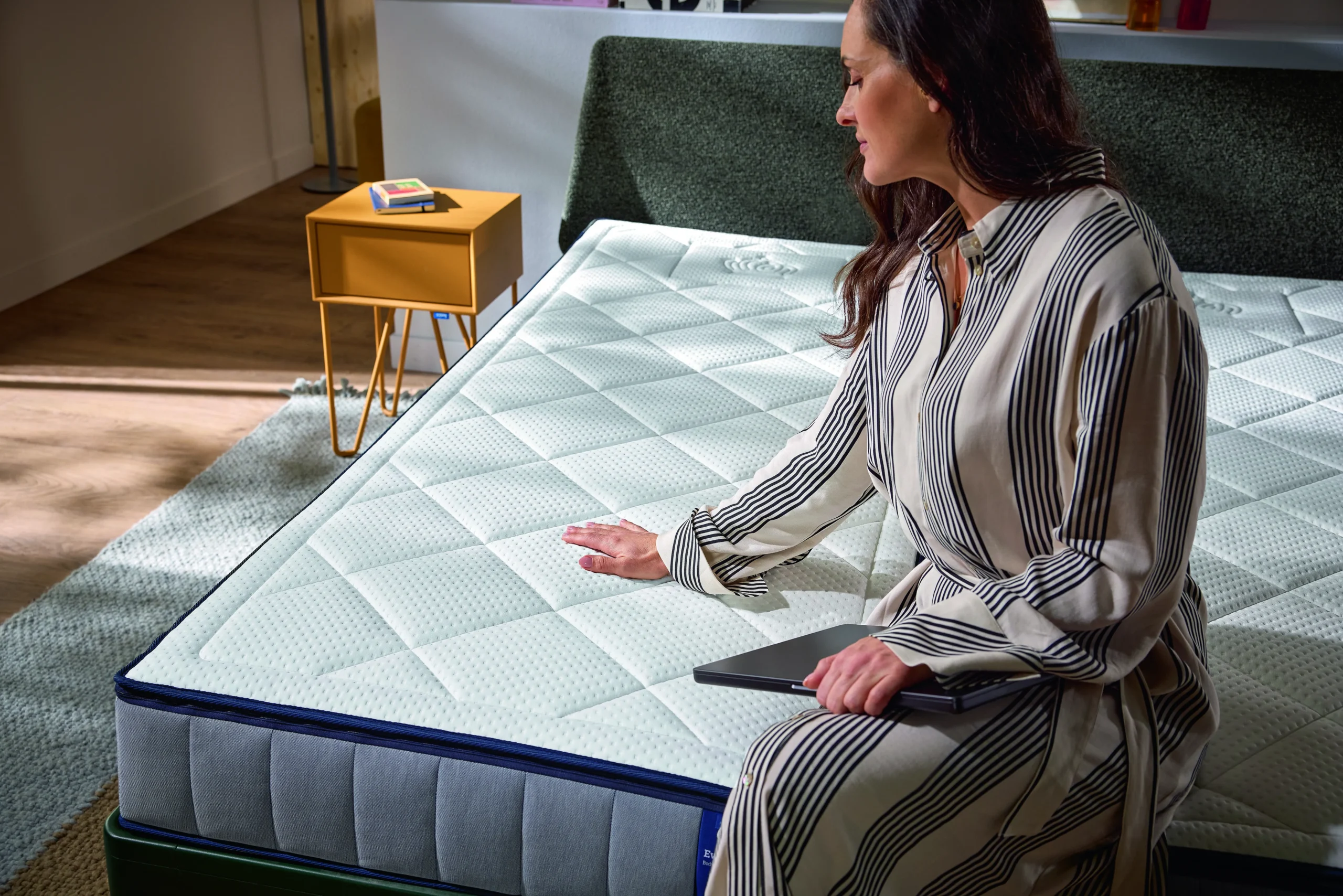
To clean a mattress, vacuum the entire surface, sprinkle it with baking soda, let it sit for at least one hour (ideally overnight), and vacuum again. This process removes dust and dust mites and neutralizes odors. Specific stains require targeted treatment before this protocol.
The basic rule: dampen, never soak. You can apply products locally, but moisture that penetrates the inside of the mattress promotes mold and damages the materials irreversibly. Always work with the least amount of liquid possible and dry each area thoroughly.
Deep cleaning: the 4-step protocol
1. Shake and vacuum
Shake the mattress to loosen embedded dirt. Then vacuum the entire surface with the brush attachment, on minimum power to avoid damaging the fabric. Pay extra attention to the head and foot areas, where friction concentrates most.
2. Apply baking soda
Sprinkle an even layer over the entire surface. Baking soda absorbs residual moisture and neutralizes acidic sweat odors.
3. Let it sit
At least 1 hour; for intense odors, overnight. The longer it sits, the more moisture absorption and neutralization of odor-causing compounds occurs.
4. Vacuum again and check it’s dry
Remove all baking soda residue with the vacuum cleaner. Before remaking the bed, verify that the mattress is completely dry. Do this on a sunny day with the room well ventilated.
How to remove mattress stains by type
| Stain type | Product | Key rule |
|---|---|---|
| Blood | Hydrogen peroxide + cold water | Never hot water |
| Urine | White vinegar + baking soda | Blot, don’t rub |
| Sweat (yellow stains) | Sodium percarbonate paste | Hot water only for the paste |
| Food and drink | Mild soap + lukewarm water | Act immediately |
Blood stains
Use cold water exclusively: heat coagulates proteins and sets the stain permanently. Apply hydrogen peroxide directly to the stain — the foam that forms indicates it’s breaking down the particles. Blot with an absorbent cloth instead of rubbing; friction pushes the blood deeper into the internal layers.
Urine stains
First remove excess liquid by pressing with absorbent paper, never rubbing. Apply white vinegar: its acidity neutralizes the ammonia responsible for the odor. For old stains, after the vinegar sprinkle baking soda, let it sit overnight, and vacuum.
Yellow sweat stains
These are oxidized mineral salts. Sodium percarbonate activates with heat, so mix the powder with a little hot water to form a thick paste (the hot water is only used to prepare the paste, never applied directly onto the mattress). Spread the paste over the area, let it work for a few minutes, rub gently, and rinse with a barely damp cloth. It’s more effective than baking soda for old organic compounds.
Note: hot water is only recommended here, to activate the percarbonate. For all other stains — especially blood — always use cold water.
Food and drink stains
Lukewarm water with a few drops of mild soap, rubbed gently with a cloth. Rinse with another cloth dampened only with cold water. For wine stains, diluted vinegar breaks down the dyes if you act quickly.
How to eliminate dust mites and mold
- Control humidity: dust mites need heat and moisture to reproduce. A breathable cover regulates both factors.
- Use waterproof, breathable covers: these are mechanical barriers against dust mites and bacteria, essential for people with allergies. Wash them frequently at high temperature.
- Direct sunlight: several hours of sun eliminate fungi through ultraviolet radiation. Very effective against mild mold.
- Diluted vinegar: if mold persists, clean the surface with white vinegar and water, let it dry completely, and then apply baking soda.
Care by mattress type
- Memory foam: very sensitive to moisture. Prioritize vacuuming and baking soda; avoid any liquid product that could seep into the foam.
- Pocket springs: tolerate airing better, but stagnant moisture can rust the metal components. Ensure air circulation around the base — a well-ventilated bed base is key to keeping the mattress dry.
Preventive routine: clean less, clean better
- Air it out for 10 minutes a day with the bed unmade, before covering it.
- Change the sheets every week and take the opportunity to vacuum the mattress.
- Always use a washable protector: this drastically reduces the need for deep cleaning.
- Flip or rotate the mattress as indicated by the manufacturer. Classic spring or foam models tend to benefit from being rotated a couple of times a year to distribute wear; Auping mattresses, on the other hand, with layered construction and specific support zones, never need rotating.
Frequently asked questions about mattress cleaning
Every 3 to 6 months. If there are pets, young children, or people with allergies at home, it’s best to vacuum monthly and apply baking soda more often.
White vinegar is safe for most fabrics and very effective against urine odors. Even so, test it first on a small, inconspicuous area, and always dilute it with water.
Because it coagulates the proteins in stains like blood, setting them permanently. Additionally, in memory foam mattresses, excessive heat and moisture damage the foam and promote mold.
The signs are persistent odors despite washing the bedding, visible dark or yellowish stains, and skin itching or respiratory symptoms upon waking.
When cleaning is no longer enough
A well-maintained mattress lasts longer and protects your respiratory health. But if the stains run deep, the odors don’t disappear, or the mattress has exceeded its lifespan, no cleaning will restore it to its original condition. Discover the range of Auping mattresses, with removable, washable covers, or visit one of our stores for advice from a specialist.