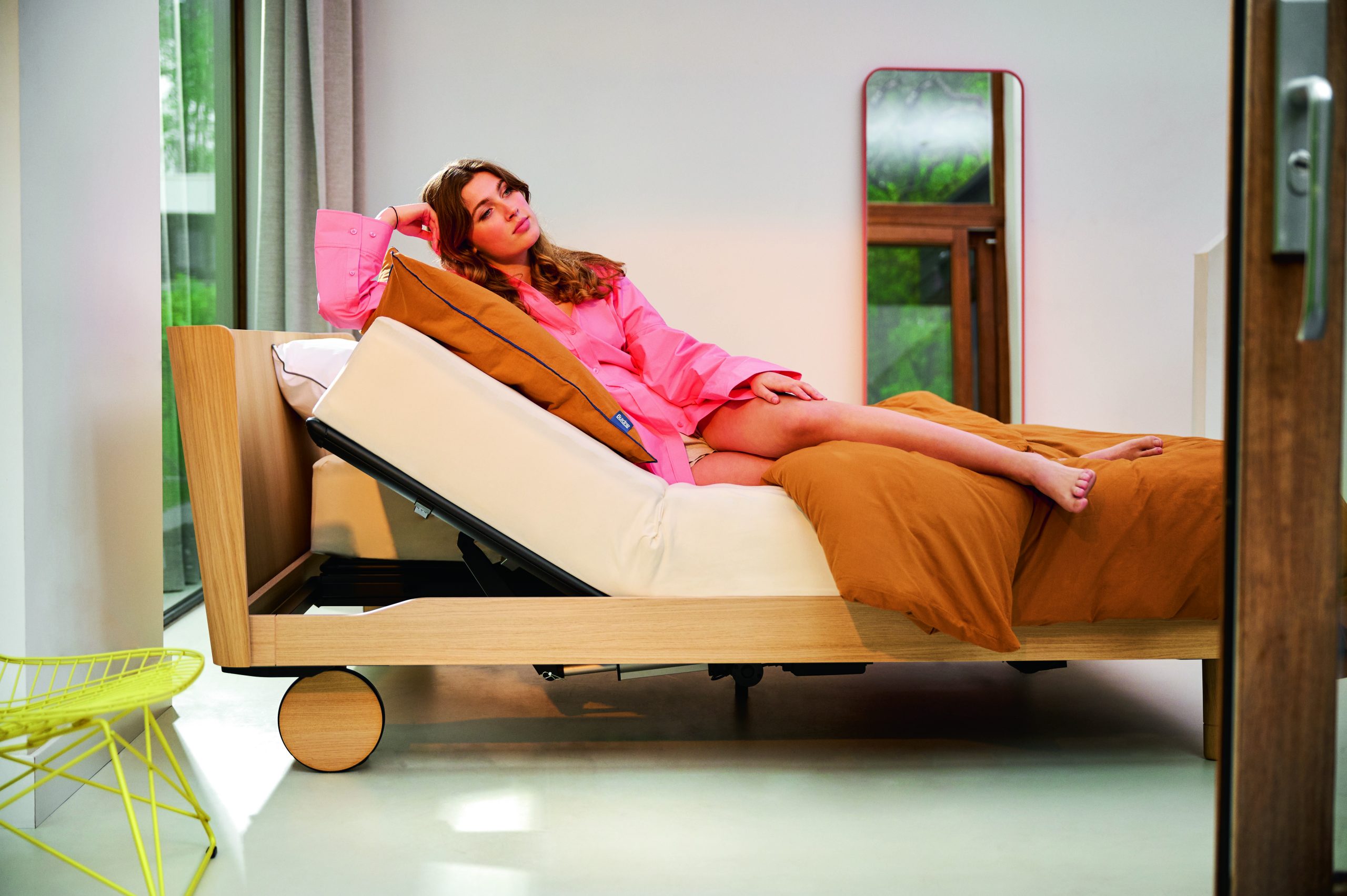
Not every mattress works with an adjustable bed. The mattress has to bend along with the base each time you raise the back or legs, regain its shape when you lower it, and withstand that movement for years without deforming. The best performers are latex mattresses, memory foam on a flexible core, and pocket springs specifically designed for adjustable bases. Continuous or Bonnell spring mattresses, and any mattress with a rigid structure or reinforced edge, are not suitable.
From there, four factors determine whether you get it right: core type, thickness, firmness, and ventilation.
What type of mattress works on an adjustable bed
| Mattress type | Suitable? | Reason |
|---|---|---|
| Latex | Yes | Natural elasticity: flexes and regains shape without fatigue |
| Memory foam on flexible core | Yes | Adapts to the body and follows the flex if the core allows it |
| Pocket springs | Only if specific | Can flex, but a reinforced edge usually prevents it |
| Continuous or Bonnell springs | No | The structure moves as one piece: bending it causes permanent deformation |
| High-density HR foam | Depends | Works if flexible; very high densities resist bending |
Latex mattress
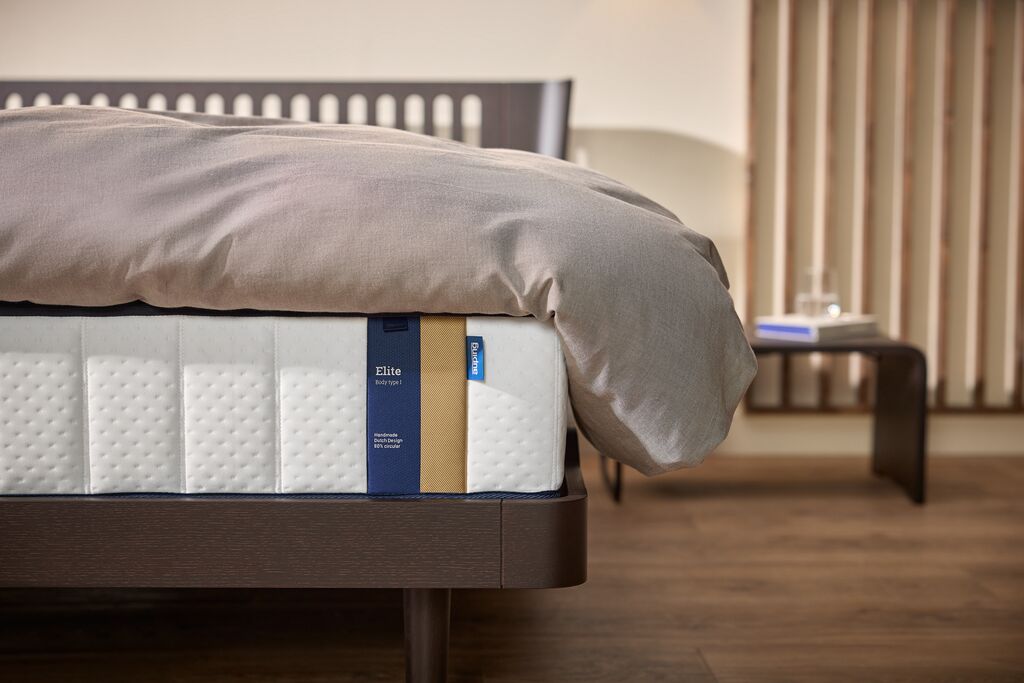
This is the most rewarding option. Latex has its own elasticity: it bends, follows the movement of the base, and returns to its original shape without “remembering” the flex. It offers good body contouring and a long lifespan. Its usual trade-off is weight — flipping it or changing the cover takes more effort — and it tends to sit at the higher end of the price range.
Memory foam mattress
This works well on an adjustable bed as long as the core underneath is flexible: the memory foam layer adapts to the body’s contour, but it’s the core that has to bend. It’s especially comfortable in an upright position, since it distributes pressure across the lower back and shoulders. The point to watch is temperature: memory foam retains heat, so base ventilation becomes especially important here.
Pocket spring mattress
Pocket springs work independently, so in theory they can flex. In practice, many come with a rigid perimeter reinforcement — designed to keep the edge from sinking when you sit on it — that prevents the mattress from bending. If you’re interested in this technology, check that the manufacturer explicitly states compatibility with an adjustable base, not just with a slatted base.
What happens if you use an unsuitable mattress
The symptoms show up sooner than you’d expect: permanent creases at the flex points, a cracked core on the inside, the mattress sliding toward the foot of the bed every time you sit up, or, quite simply, the base rising while the mattress doesn’t follow, leaving a gap under your back that ruins the very posture you were trying to achieve.
That said, you don’t need an exotic mattress either: most quality mattresses made in the last decade already account for use on an adjustable base. The key is checking beforehand, not assuming.
Thickness: between 18 and 25 centimeters
The rule is simple: the thicker it is, the less it flexes. A very tall mattress may resist following the movement, form wrinkles at the fold point, or lift the foot of the bed as it rises.
Below 18 cm, you may feel the base through the mattress, especially if you sleep on your side. Above 25 cm, it’s worth confirming compatibility with the manufacturer, although some high-end mattresses are built to flex despite their thickness.
Firmness: neither a board nor a cloud
On an adjustable bed, a medium or medium-firm firmness performs best. A mattress that’s too firm resists flexing and transmits that stiffness to your posture; one that’s too soft folds excessively when the back is raised and stops supporting the lower back just when it’s needed most.
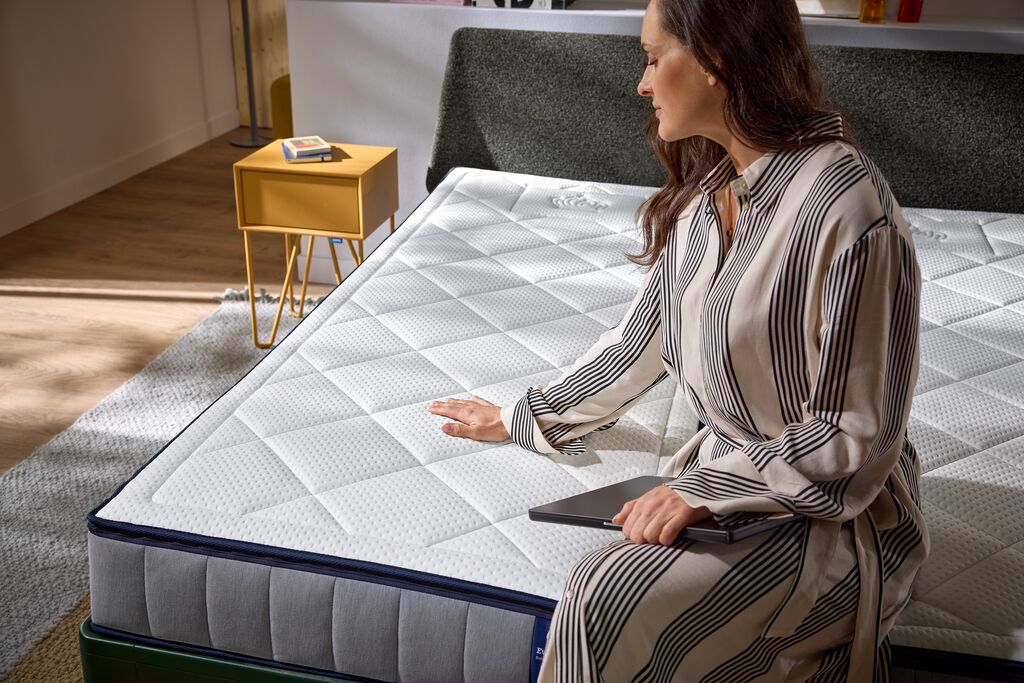
The exact firmness also depends on your weight and whether you sleep on your back, side, or stomach: these variables overlap, and the only reliable way to sort them out is to lie down and try.
Ventilation: the factor almost no one checks
During the night, the body releases moisture, and that moisture needs somewhere to go. On an adjustable bed, this gets more complicated: when the back is raised, the contact area concentrates and air circulates less. If neither the mattress nor the base evacuates that moisture, it stays trapped, sleep quality drops, and the mattress’s lifespan shortens.
That’s why ventilation isn’t just about the mattress: it depends just as much on the base it rests on. A closed base cancels out even the best ventilation technology.
Sizes: 90×190 and the double bed
The most common size for a single adjustable bed is 90×190, followed by 90×200 and 105×190 for those who want a bit more room. In these sizes, the range of compatible mattresses is wide.
For a double adjustable bed, the solution usually isn’t one large mattress, but two single mattresses on two adjustable bases placed side by side within the same frame. This way, each side can be raised independently and each person can have their own firmness. A single 150 or 180 cm mattress on two separately moving bases ends up straining in the middle and cancels out much of the benefit of adjustability.
Can you keep using your current mattress?
Sometimes, yes. Before deciding, make three checks:
- Look for compatibility with an adjustable base on the label or in the manufacturer’s specs.
- Identify the core type using the table above.
- Measure the thickness.
If it’s latex or memory foam with a flexible core, is between 18 and 25 cm, and is less than seven or eight years old, it has good odds of working. If it has continuous springs, comfortably exceeds 25 cm, or has already clocked up years of use, it’s more sensible to replace it along with the base: forcing a mattress that won’t flex ends up ruining both the experience and the mattress itself.
When the base and mattress are designed together
Almost everything above exists because the mattress and base are usually made by different companies that haven’t coordinated with each other. The mattress tries to ventilate against a base that doesn’t; the base flexes and the mattress resists. When both layers are conceived as a single system, the problem stops arising.
This is the approach behind Auping adjustable beds. The base is the Adaptive Mesh: a woven steel mesh with 10,000 points that contour the body at any angle and leave 80% of the surface open, so air circulates and nighttime moisture is evacuated even with the bed raised. Inside the mattress, the AVS® system (Active Ventilation & Support) repeats that same logic of ventilation and support.
The adjustable bases are also compatible with most mattresses and beds on the market in standard sizes, so you don’t have to change everything at once. You can choose between one, two, or three motors depending on how finely you want to adjust your position. The mesh and frame are covered by a 35-year warranty; the motors and electronics, by 5 years.
How to make up an adjustable bed
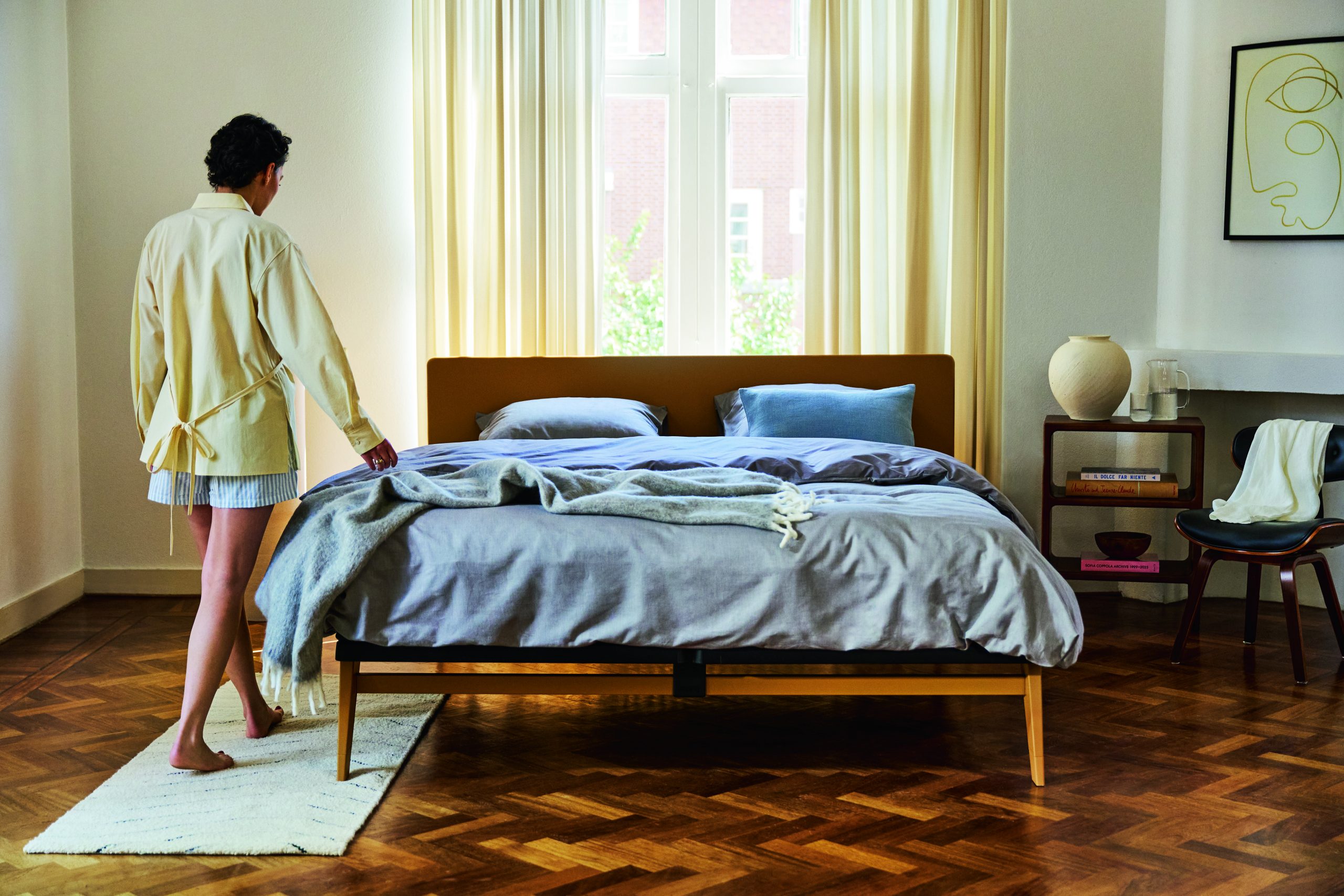
With an adjustable bed, a conventional fitted sheet tends to come loose as soon as you raise the back. The usual solution is split sheets (also known as H-sheets), designed for double beds with two independent bases: they fit each side separately, letting each base move without dragging the bedding along. For a single bed, a fitted sheet with good depth and a full elastic edge is enough.
Frequently asked questions
No. The mattress needs to be able to flex with the base and regain its shape. Latex, memory foam on a flexible core, and pocket springs designed for adjustable bases work well. Continuous or Bonnell spring mattresses, and those with a rigid, reinforced perimeter, don’t.
Latex handles repeated flexing best thanks to its natural elasticity. Memory foam on a flexible core is the most comfortable in an upright position, though it retains more heat. There’s no single absolute best: it depends on your weight, your sleeping position, and whether you tend to sleep hot.
Between 18 and 25 centimeters is the range that best balances comfort and flexibility. Below 18 cm, you may feel the base; above 25 cm, it’s worth confirming with the manufacturer that the mattress is designed to bend.
Check three things: that the manufacturer’s specs mention compatibility with an adjustable base, that the core is latex, flexible memory foam, or specific pocket springs, and that the thickness is between 18 and 25 cm. If it has continuous springs or is more than seven or eight years old, it’s best to replace it along with the base.
Two single mattresses on two adjustable bases placed side by side, not a single mattress. This way, each side can be raised independently and each person keeps their own firmness. A single mattress on two moving bases strains in the middle and loses much of the benefit.
Medium or medium-firm. A very firm mattress resists flexing; a very soft one stops supporting the lower back when the back is raised. The exact firmness depends on your weight and your usual sleeping position.
Only if it wasn’t designed for it. A compatible mattress has a lifespan equivalent to one on a fixed base. What does shorten its life is trapped moisture, which is why the base’s ventilation directly affects how long it lasts.
The base and mattress are one system
Getting the mattress right does little good if the base doesn’t keep up, and vice versa. Discover Auping mattresses, designed to work with the same ventilation and support engineering as the Adaptive Mesh, or visit our showroom to try the different combinations and leave with your setup already decided.