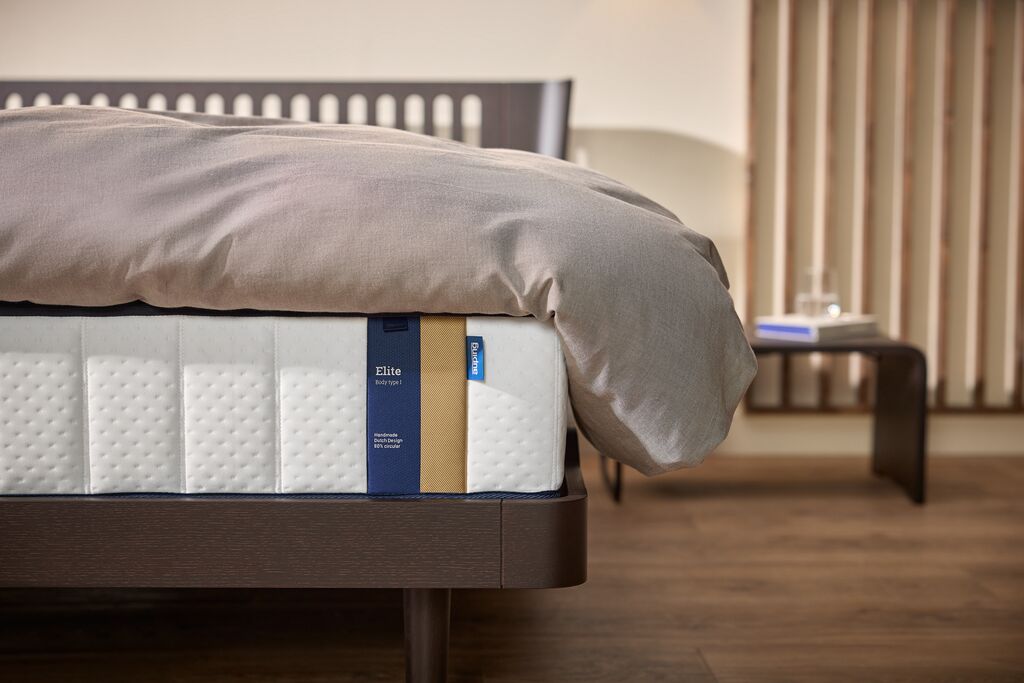
It’s not one thing — it’s three layers. A hotel bed is made up of an upholstered base with springs, a mattress on top, and a topper that crowns the whole thing. That structure spreads out weight, ventilates better, and gives that cushioned firmness that’s hard to reproduce at home with a mattress on a slatted base. On top of that, there’s the bedding, the room’s environment, and a detail almost no one considers: in a hotel, that bed is far newer than yours.
Let’s go through it piece by piece, since each layer contributes something different, and not all of them are equally easy to replicate.
The three layers of a hotel bed
| Layer | What it does | Why you notice it |
|---|---|---|
| Upholstered base | Supports and ventilates the whole system | Absorbs part of the movement and raises the bed to a comfortable height |
| Mattress | Provides the main support for the body | Usually medium firmness, the level that works for most people |
| Topper | Adds the surface comfort layer | Directly responsible for the cushioned feel when you lie down |
The base: what you don’t see
This is the most overlooked layer, and the one that changes the experience the most. In a hotel, there’s no slatted base sitting inside a frame: there’s an upholstered base, usually with springs inside, that works together with the mattress instead of simply holding it up.
That has two consequences. First, the whole system absorbs movement better, so you notice less when the other person turns over. Second is ventilation: a base with an open structure lets out the moisture the body releases during the night, and a mattress that breathes stays fresher and lasts longer.
The mattress: medium firmness, almost always
Hotels choose medium firmness for a practical reason: it’s what works for the largest number of people, regardless of weight or sleeping position. It’s not the perfect mattress for anyone in particular, but it’s the one the fewest people reject.
Pocket springs are common because they work independently: each one sinks in only where it receives pressure, which provides zoned support and makes it easier to turn over without dragging the person next to you along.
The topper: responsible for the feel
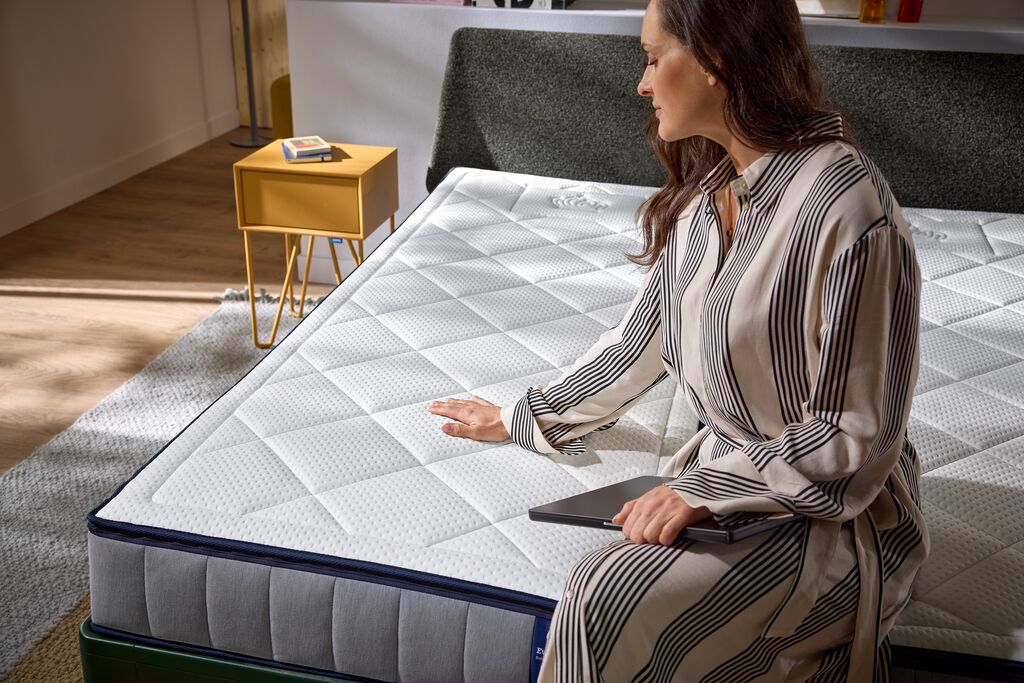
If you had to pick just one layer to replicate at home, this would be it. The topper is a thin layer placed on top of the mattress that defines the initial touch: that cushioned feeling you notice when you lie down and immediately associate with a hotel bed.
There’s also a detail that explains something you may have noticed without quite naming it. Many hotel double beds are actually two single beds pushed together, and yet you never feel the seam in the middle. The reason is the topper: being one continuous piece, it covers the join between the two mattresses and creates a uniform surface. Auping toppers work the same way, with a button-and-strap system that keeps them fastened to the mattress so they don’t shift during the night.
It’s also the cheapest of the three layers, and the only one you can add to a bed you already have.
The bedding matters too
Good-weight cotton sheets, ironed and taut. A duvet with filling suited to the room’s temperature. Pillows of different heights so each person can choose.
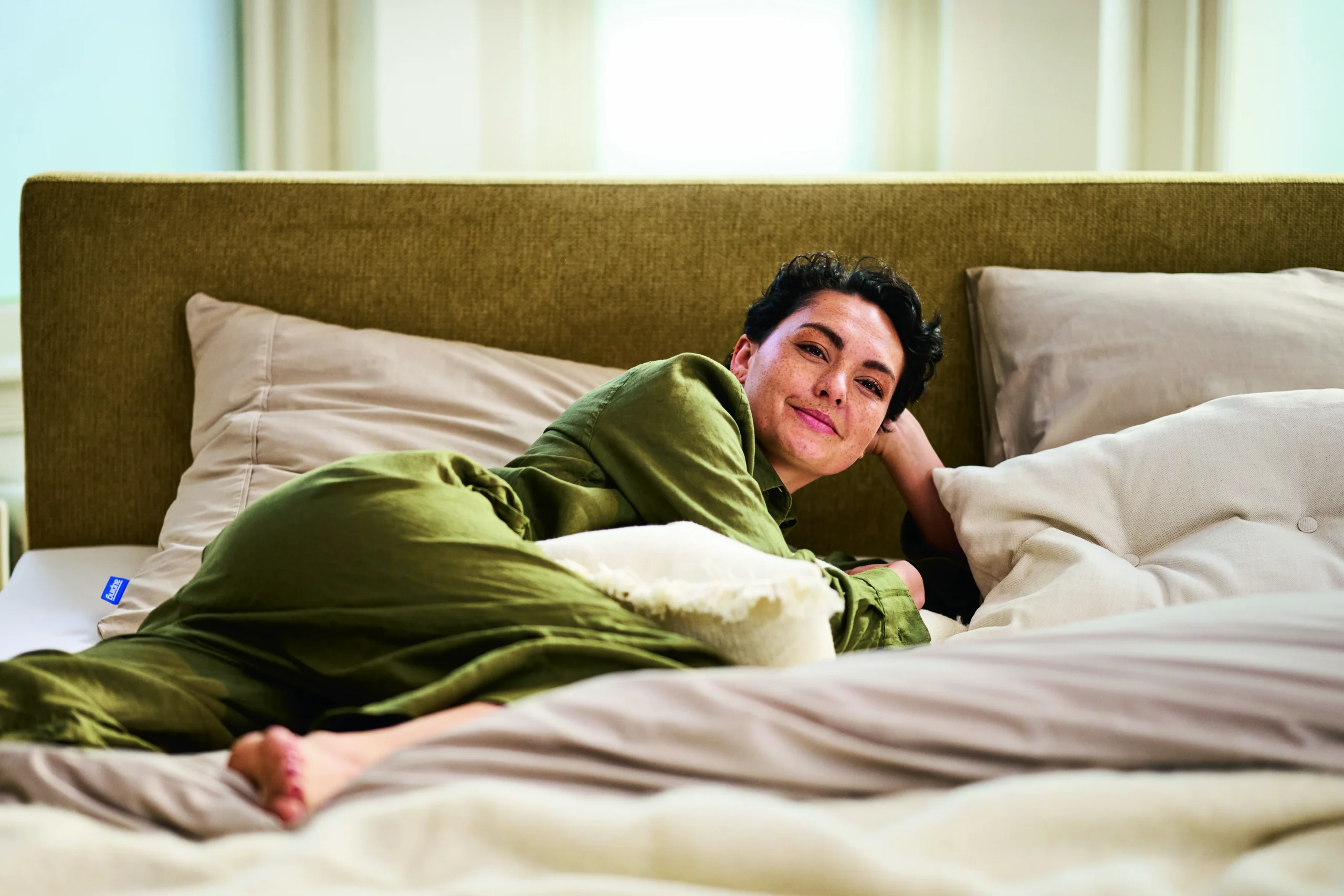
None of this is technology — it’s upkeep. Hotels wash and replace bedding constantly, and a freshly washed sheet doesn’t feel anything like one that’s been on the bed for three weeks.
What isn’t the bed: the environment
It’s worth being honest about this, because half of the hotel effect doesn’t come from the mattress:
- Total darkness. Blackout curtains block the light that at home seeps in through the blinds.
- Cool, consistent temperature. Usually around 18-20°C, the range in which the body falls asleep most easily.
- Silence and isolation, or at least a steady background hum from the air conditioning.
- No pending chores. No laundry to hang, no kitchen to tidy. Your head arrives at the bed differently.
You can replicate the first three with blackout curtains and temperature control. The fourth is harder.
Age: the factor no one looks at
A hotel replaces its beds every few years because they’re part of its product. At home, a mattress lasts ten years or more, and it’s common not to replace it until it starts to bother you.
So part of the comparison is unfair: you’re not really comparing your bed to a hotel bed, but your nine-year-old bed to a two-year-old one. If yours already sags in the middle or you can feel the springs, no sheet is going to fix that.
How to recreate a hotel bed at home
In order of impact relative to cost:
- Add a topper. It’s the most noticeable change for the least money, and it works on the mattress you already have. See the range of Auping toppers.
- Upgrade to heavier-weight sheets and wash them more often.
- Darken and cool the room. Blackout curtains and 18-20°C.
- Check your mattress’s age. Past ten years, no topper compensates for that.
- Replace the base. This is what transforms the whole setup the most, and it’s the thing almost no one considers, because we usually assume rest depends on the mattress alone.
The format hotels use has a name: boxspring
That three-layer bed — upholstered base, mattress, and topper assembled as one unit — is what the industry calls a boxspring, and it’s the format that has become widespread in hospitality precisely for the reasons we’ve covered: it spreads weight, ventilates, and offers a comfortable height for getting in and out of bed.
At Auping, the three layers are designed as a single system. Inside the box is a steel mesh base that’s 80% open, alongside pocket springs that are also found in the mattress. That combination is what allows the whole system to ventilate and lets you turn over effortlessly. And it’s no small detail: during the night we move an average of 30 times and lose around 350 cc of fluid, which has to go somewhere.
You can see all three configurations at Auping boxsprings:
- The Original Boxspring is the most popular in the range: spiral mesh base and pocket springs, customizable in 14 fabrics, 10 leg colors, and 8 headboards.
- The Criade Boxspring stands out for its exposed steel frame, which brings firmness and a visual lightness that fits contemporary interiors.
- The Kiruna Boxspring is the most luxurious, with mattress protectors of sheep’s wool or horsehair and a mattress with 7 support zones.
All three support up to 3 motors to adjust the back, feet, and head, are controlled from your phone or a remote, and are handmade in Deventer with a 35-year warranty against wire and frame breakage.
Frequently asked questions
Because of the combination of three layers — upholstered base, mattress, and topper — along with freshly washed bedding and a dark, cool environment. It also helps that a hotel bed is usually much newer than the one at home, since it’s replaced every few years.
Usually medium-firmness mattresses, often with pocket springs. Medium firmness is what’s comfortable for the largest number of people, regardless of their weight or sleeping position.
A boxspring is a bed that integrates an upholstered base, mattress, and topper into a single unit, rather than fitting a mattress onto a base inside a frame. Hotels use it because it spreads weight well, ventilates, and keeps the bed at a comfortable height for getting in and out.
Yes, partly. Adding a topper to the mattress you already have is the most noticeable change relative to cost. Upgrading to heavier sheets and darkening the room covers much of the rest of the effect. Replacing the base transforms the setup the most, but that already means getting a new bed.
Because many of them are actually two single beds pushed together with a continuous topper on top. Being a single piece, the topper covers the join between the two mattresses and creates a uniform surface, so the center division isn’t noticeable.
It adds the surface comfort layer: it’s directly responsible for the cushioned feeling when you lie down. It won’t fix a mattress in poor condition, but it clearly improves the feel of one that’s still in good shape.
Every few years, since they’re part of the product they sell. At home, it’s common to stretch a mattress’s life to ten years or more, which explains much of the difference you notice when sleeping away from home.
Around 18-20°C, the range in which the body falls asleep most easily. It’s one of the easiest parts of the hotel effect to replicate at home.
Good rest starts with the base
The feeling you remember from a hotel doesn’t come from the mattress alone: it comes from the three layers working together. Discover Auping boxsprings, where base, mattress, and topper are designed as a single system, or visit our showroom to lie down and feel the difference before deciding.