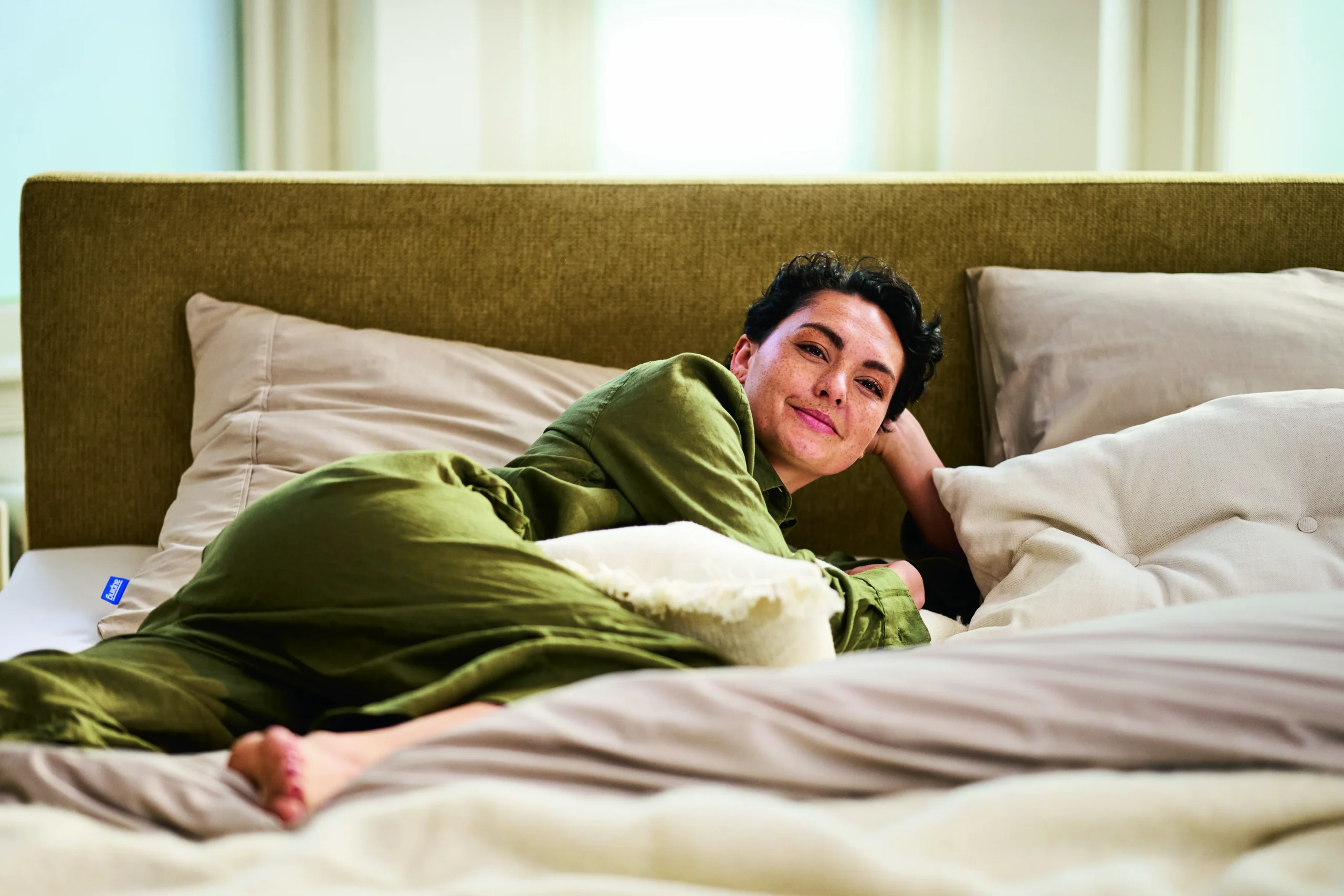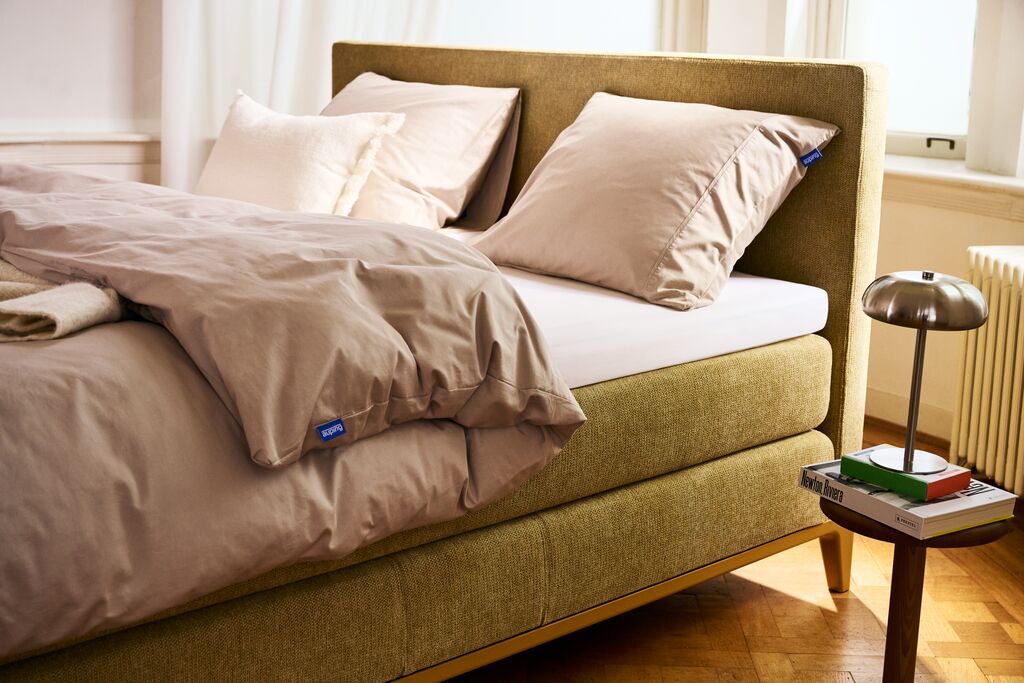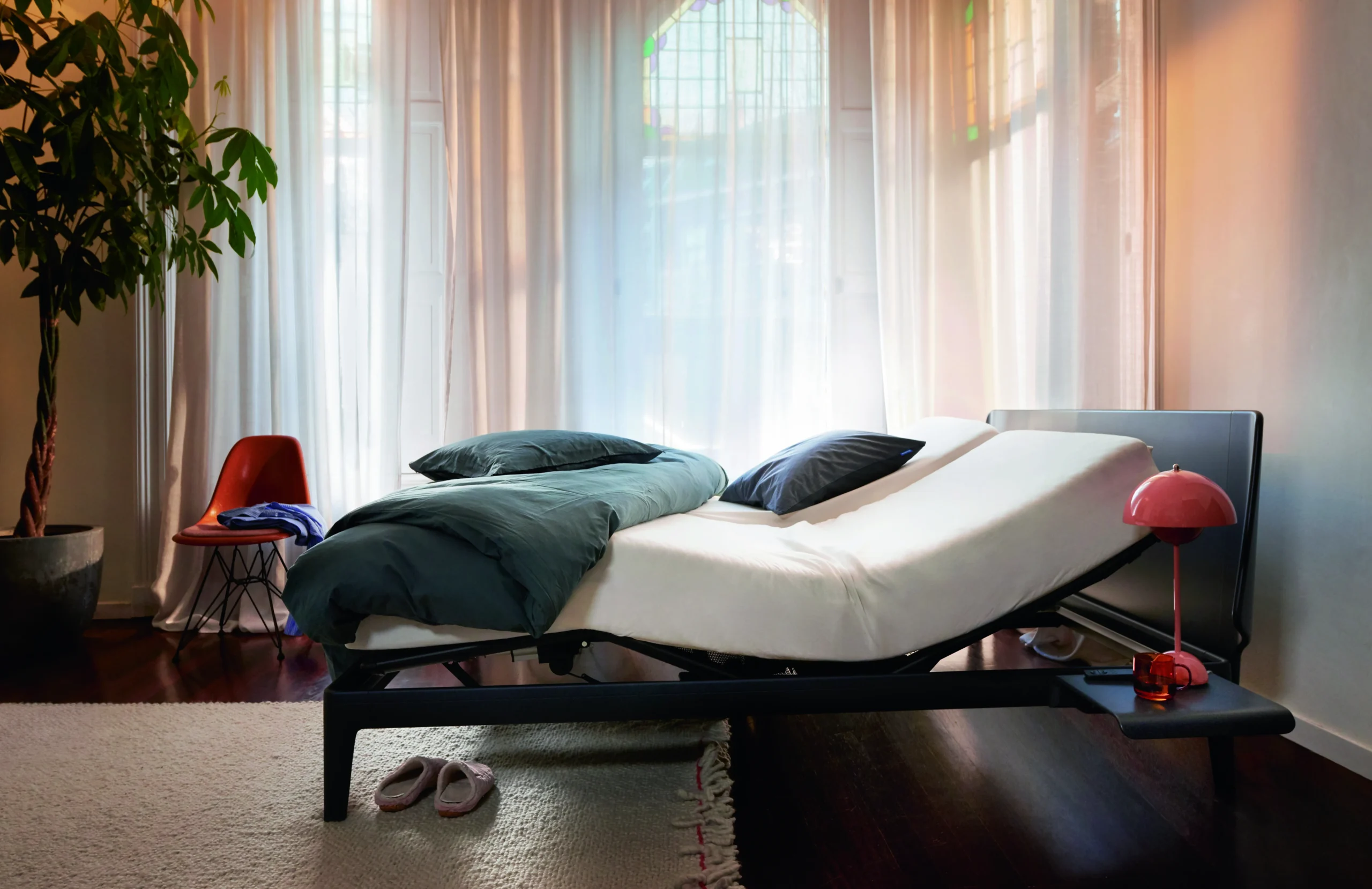
An upholstered headboard comes down to four decisions: size, type of padding, fabric, and whether it’s freestanding or built into the bed. Of these four, the one most people underestimate is the fabric — it determines the feel, how the piece ages, and whether you’ll be able to clean it two years from now. And the last one, freestanding versus built-in, is the one that causes the most regret when discovered too late.
Let’s go through them in order.
What size should an upholstered headboard be
Width: the same as the bed, or a few centimeters more. A headboard narrower than the mattress leaves the edges exposed and makes the bed look poorly put together. Wider is a valid aesthetic choice — it visually extends the wall — but it should be intentional and symmetrical, not a few centimeters off by accident.
Height: the usual reference is between 100 and 120 cm from the floor, which gives good proportion under a standard ceiling. If the ceiling is high, you can go up to 130 or 140 cm without it looking out of place. And if you read in bed, measure with your body, not a tape measure: the headboard needs to support your head and shoulders while sitting up, not stop at kidney height.
Types of upholstered headboards
| Type | What defines it | Suits |
|---|---|---|
| Plain | Continuous surface, no seams | Contemporary and minimalist interiors |
| Tufted (chesterfield) | Diamond padding with buttons | Classic or romantic settings |
| Panel | Vertical or horizontal padded strips | Bedrooms with a modern feel |
| Wingback | Side panels that embrace the bed | Larger rooms; adds a sense of coziness |
| Low-profile | Reduced height, close to mattress level | Small bedrooms or low ceilings |
Plain and panel headboards age the best
This is an opinion, but a well-founded one: tufted headboards are highly recognizable, and for that reason easy to date. The buttons collect dust, and if the foam sags, the diamond pattern deforms visibly. A plain or wide-panel headboard holds up better against passing trends and cleans without awkward corners.
The fabric: what really decides the result
This is where a headboard succeeds or fails, and where it’s most worth seeing a physical swatch before deciding.
- Linen. Breathable, with a natural drape. It wrinkles, and that’s part of its character. Ages well.
- Cotton. The safe balance: durable, easy to clean, and available in any color.
- Velvet. The most enveloping, and the best at catching light. Shows marks and rubbing, so in light tones it takes upkeep.
- Chenille. Soft to the touch and highly resistant to daily use. A good choice if you lean against it to read every night.
- Bouclé. The trending fabric right now, with its looped texture. Very striking, but traps lint and pet hair.
Two criteria that matter more than color: whether the cover is removable — because a headboard rubs where the head rests, and that mark will appear — and how the fabric behaves under your bedroom’s light, which isn’t the same as the showroom’s.
Modern upholstered headboards: what defines them today
The trend is moving toward the opposite of tufted: clean surfaces, discreet padding, straight or very gently curved lines, and the material taking center stage over the shape. The dominant tones are earthy shades, natural greens, and warm grays, with deep blue as a bold choice when the bed is meant to be the room’s focal point.
Designer headboards also tend to share one detail: the piece doesn’t read as something added onto the wall, but as part of the furniture itself. Which brings us to the important decision.
Freestanding headboard or built into the bed
This is the question almost no one asks at the start, and the one that determines the result the most.
Freestanding headboard. Bought separately and either fixed to the wall or leaned against it behind the bed. It’s the flexible, more affordable option: you can change it without touching the bed. Its problem is consistency — a headboard bought from one place and a base bought from another almost never match perfectly. The fabric isn’t the same, the tone is close but not identical, and there’s a visible seam between headboard and base that the eye catches immediately.
Built-in headboard. Part of the bed, upholstered in the same fabric and at the same workshop. No seam, no tonal mismatch, and no gap for pillows to slip through at night. The trade-off is that you choose the headboard and the bed together, as a single decision.
This is the approach behind Auping boxsprings: the base, mattress, and headboard are hand-upholstered in the same fabric at the Deventer factory. The Original Boxspring offers 8 headboard models and 14 fabrics; the Criade, 4 models with its exposed steel frame; and the Kiruna works with a selection of high-end fabrics. If you’d prefer the headboard on a lighter structure, Auping beds follow the same upholstery approach.
Worth saying plainly: Auping doesn’t sell headboards separately. If what you’re after is exactly that — a freestanding headboard for a bed you already own — this isn’t the right store for you. But if you’re renovating the whole bedroom, it’s worth comparing both paths before deciding.
Headboard for a double bed: the sizes
For a double bed, headboard width follows the bed’s width, not the mattress’s:
| Bed | Headboard width |
|---|---|
| 135 cm | 135-145 cm |
| 150 cm | 150-160 cm |
| 160 cm | 160-170 cm |
| 180 cm | 180-190 cm |
One detail specific to double beds: if the bed is made up of two independent bases — common in adjustable setups or when each person wants their own firmness — the headboard needs to be a single continuous piece. Two separate single headboards side by side mark the division right in the center and undo the look of a double bed.
Frequently asked questions
Between 100 and 120 cm from the floor works in most bedrooms with a standard ceiling. With high ceilings, you can go up to 130 or 140 cm. If you read in bed, check that it supports your head and shoulders while sitting up, not just lying down.
Cotton and chenille are the most resistant to daily use. Linen ages very well but wrinkles, and velvet is the most enveloping though it shows marks. More important than the fiber itself: whether the cover is removable, since the area behind the head wears with time.
The main ones are plain, tufted with diamond-pattern buttons, vertical or horizontal panel, wingback with enveloping sides, and low-profile. Plain and panel headboards hold up best against passing trends.
The same as the bed, or a few centimeters more: 135-145 cm for a 135 cm bed, 150-160 for a 150 cm one, and 180-190 for a 180 cm one. Never narrower than the mattress, as that leaves the edges exposed.
Freestanding is more flexible and affordable, and can be changed without touching the bed. Built-in guarantees that fabric and tone match the base and avoids a visible seam between the two. If you’re renovating the bed anyway, built-in gives a cleaner result.
It depends on whether the cover is removable. If so, follow the label’s instructions. If not, vacuum it with the fabric attachment and treat stains dry as soon as possible, without rubbing, since rubbing spreads the stain and raises the fabric’s fibers.
A low-profile, plain one, in a tone close to the wall’s. Tall headboards and wingback styles work in larger rooms, but in a small room they take up too much visual space and make the bed look bigger than is desirable.
From the headboard to the whole bed
If the headboard you’re looking for is part of a broader renovation, it’s worth seeing it as a whole. Discover Auping boxsprings, where base, mattress, and headboard are upholstered by hand in the same fabric, or stop by our showroom to see and touch the fabrics before deciding — the only reliable way to choose one.