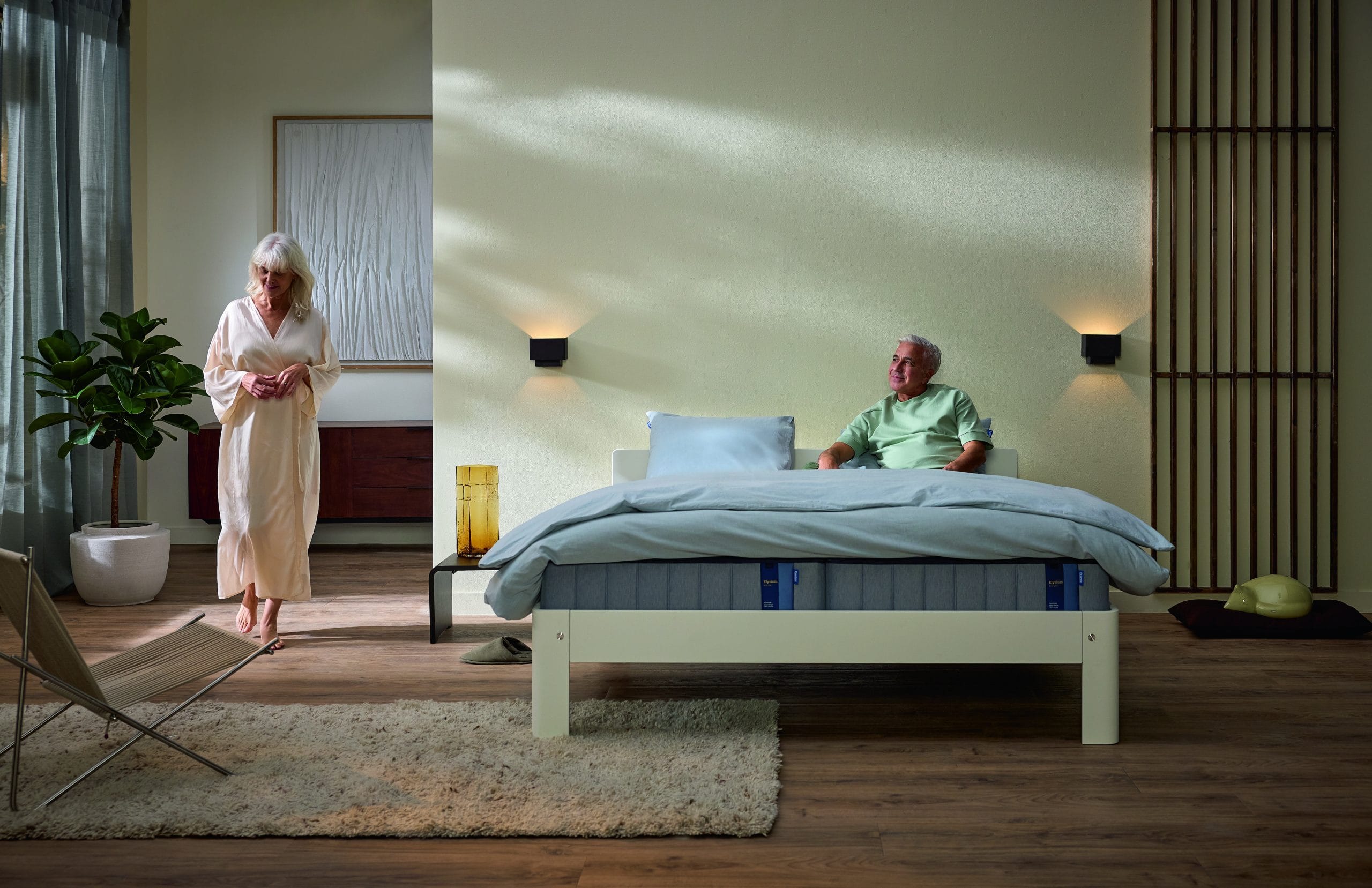
If you are looking for the best mattress for back pain, do not assume that the firmest mattress is automatically the best choice. For adults with non-specific low-back pain, the available evidence generally supports a medium to medium-firm mattress over a very firm surface. Firmness, however, is only one part of the decision: shoulder and hip adaptation, your usual sleep position, body type, whether you share the bed and the base underneath the mattress all matter.
A mattress can contribute to comfort and sleep quality, but it does not diagnose or treat persistent back pain on its own. Seek medical advice if pain is severe, recurring or accompanied by other symptoms.
Is a firm mattress better for your back?
Not necessarily. The common idea that “the firmer the mattress, the better for your back” is too simplistic.
A randomised clinical trial involving people with chronic non-specific low-back pain reported better outcomes with medium-firm mattresses than with firm mattresses. Later reviews also point to medium or medium-firm as a reasonable starting point, while stressing that there is no single ideal firmness for everyone.
The important distinction is between firmness and support. A surface that is too firm may prevent the shoulders or hips from yielding enough. A surface that is too soft may allow some areas of the body to sink too far. The goal is to distribute weight, adapt to the body and maintain a comfortable position through the night.
This is why two people of a similar height may still prefer different mattresses. Weight, body shape, usual sleep position and personal comfort preferences all change how a mattress compresses.
Which mattress should you choose for your sleep position?
Your usual sleep position is one of the most useful factors when comparing mattresses. Research linking sleep posture and low-back pain still has limitations, but a recent systematic review found that sleep alignment may matter: sleeping on the back was associated with better alignment, sleeping on the stomach may increase lumbar strain, and side sleeping makes support and alignment especially important.
| If you usually… | Prioritise | Useful starting point | Do not choose only by… |
|---|---|---|---|
| Sleep on your back | Continuous support and lumbar stability | Medium to medium-firm feel | “Firmer is always better” |
| Sleep on your side | Shoulder and hip adaptation without losing support | Adaptive surface with differentiated zones | A rigid surface that creates pressure |
| Sleep on your stomach | Limiting excessive pelvic sink | Greater stability, adjusted to your body | An overly enveloping surface |
| Change position frequently | Responsiveness and ease of movement | Adaptive, responsive construction | A feel recommended by someone else |
| Sleep with a partner | Independence between sides | Individually configurable sides where possible | Forcing both sleepers into one firmness |
This table is guidance, not a medical prescription. The aim is not to chase a label such as “hard”, “orthopaedic” or “ergonomic”, but to check how the complete sleep system responds when you lie in your actual sleeping position.
If you sleep on your back
Look for a surface that prevents excessive pelvic sinking while supporting the lower back naturally. Medium or medium-firm is a sensible starting point, particularly when non-specific low-back pain is the main concern.
The mattress does not need to feel rigid. It should provide support while still adapting to the shape of the body.
If you sleep on your side
Side sleeping places more emphasis on shoulder and hip adaptation. These areas need enough give to avoid excessive pressure while the rest of the body remains supported.
When choosing a mattress for side sleeping, look at differentiated support zones and how the upper layers respond under the shoulder and hip. Side sleepers do not necessarily need a “soft” mattress; they need a balance of pressure relief and support.
If you sleep on your stomach
Stomach sleeping may increase lumbar strain if the central part of the body sinks too much. A more stable surface may therefore make sense, but this should not be turned into a universal firmness rule: your weight and anatomy materially affect how the mattress behaves.
If you change position during the night
Not everyone stays in one position for eight hours. If you move frequently, consider mattress responsiveness as well as support: you should be able to change position easily and the materials should recover their shape quickly.
Ventilation may also matter if you tend to sleep warm or want a cooler sleep environment.
What if you sleep with a partner?
Choosing a mattress as a couple adds an often-overlooked factor: two people can share a bed while needing different support.
Body weight, height, sleep position and firmness preference may differ. This makes systems that allow each side to be configured independently especially useful, rather than forcing both sleepers into one compromise firmness.
Movement independence also matters. If one person’s movement transfers easily across the bed, every position change can disturb the other sleeper.
Within the Auping range, for example, Two has seven zones and is offered in medium or firm options; double configurations can be personalised by side. Evolve and Elysium also allow differentiated configurations in double versions, which may be worth considering when two sleepers have different needs.
The mattress does not work alone: the base matters too
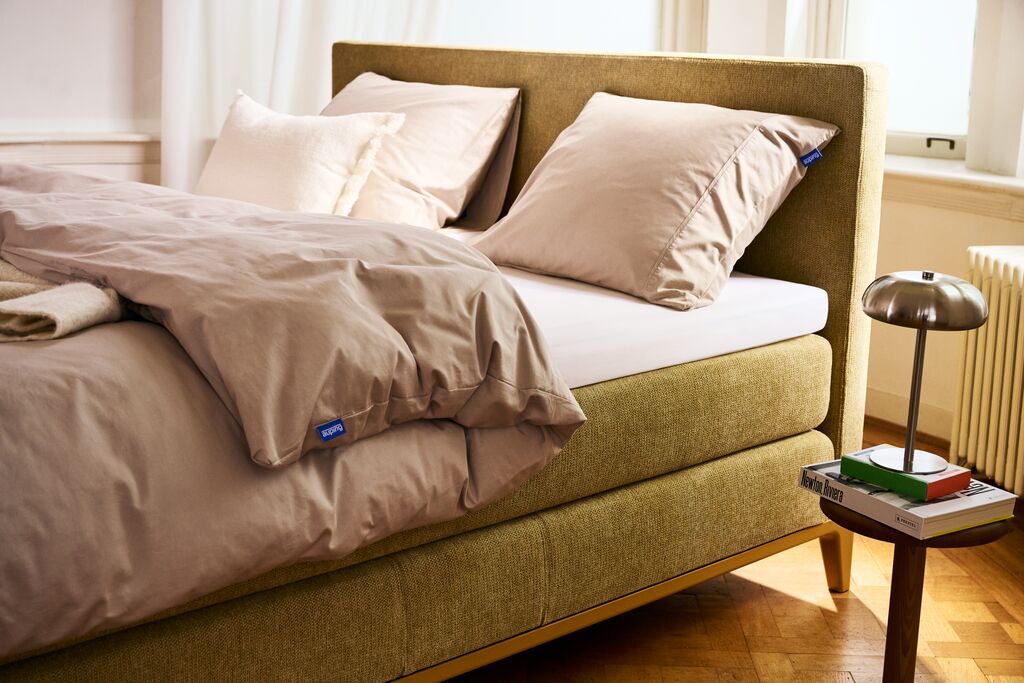
When people search for the best mattress for their back, it is easy to focus only on what happens above the mattress. Yet mattress and base form one sleep system: the base affects support, ventilation and how the mattress responds as body weight shifts.
The Auping Adaptive Mesh Base provides 10,000 support points and keeps 80% of its surface open, supporting airflow through the sleep system. On an adjustable base, the position of the back and legs can also be changed.
That does not make an adjustable bed a medical treatment for back pain. Its functional advantage is different: it allows you to change your resting position and explore positions that a flat base cannot provide.
If you are considering an adjustable bed, separate two decisions: which mattress suits the way you sleep, and which mattress is compatible with a base designed to flex. For that second question, see our guide to choosing a mattress for an adjustable bed.
Which Auping mattress matches which need?
There is no Auping model that can responsibly be called “the best mattress for back pain” for everyone. The evidence does not support that kind of universal promise.
What we can do is relate verified product characteristics to different sleep needs.
| Need | Option to consider | Relevant characteristics |
|---|---|---|
| Two sleepers with different preferences | Auping Two | 7 zones, medium or firm options and independent side configuration in double setups |
| You move a lot or prioritise ventilation | Auping Evolve | 3 firmness options, 3D fabric, Vent-Tex® ventilation and differentiated double configuration |
| You want more precise body adaptation | Auping Elysium | Harmony-pocs® micro springs, 3 firmness options and different side configurations in double versions |
| You are not yet sure what feel you need | Auping mattress range | Lets you compare constructions, firmness levels and configurations before deciding |
These are product characteristics, not medical indications. The best option depends on how each configuration responds to your body and sleeping habits.
How to test a mattress before choosing
Specifications help narrow down options, but they cannot tell you exactly how your body will feel on a mattress.
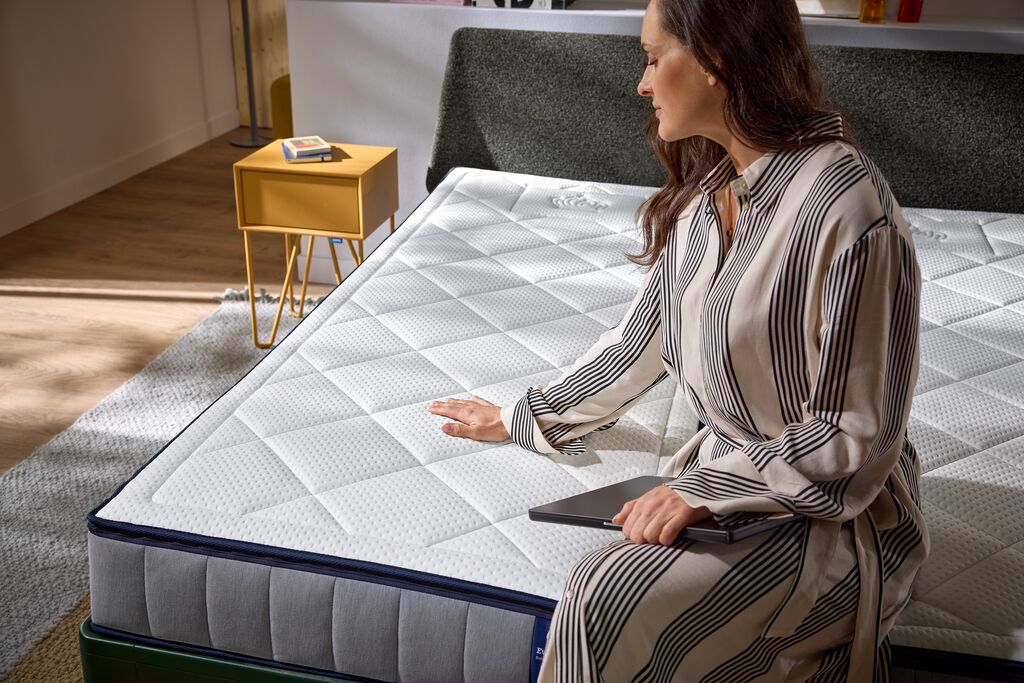
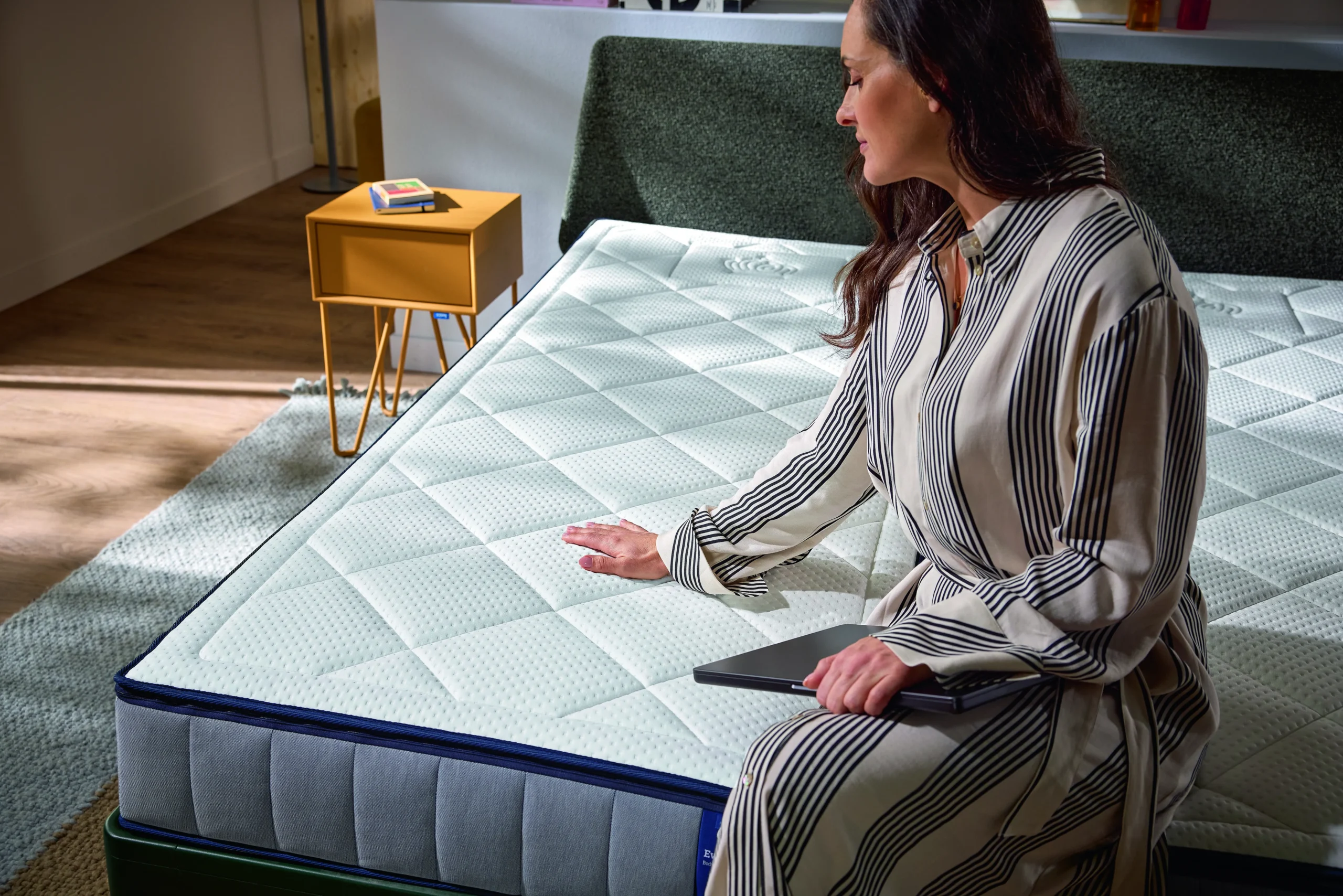
Test it lying in your usual sleep position rather than simply sitting on the edge. Check whether you can relax without excessive pressure in the shoulders, hips or lower back. Change position several times and notice whether movement feels natural. If you share the bed, test it together: a firmness that works for one person may not work for the other.
It is also worth testing the mattress with the base you intend to use. The final feel comes from the complete system, not one component in isolation.
Scientific research has an important limitation too: studies group very different mattresses under labels such as “medium-firm”, and they vary in participants, materials and measurement methods. The evidence is useful for rejecting overly simple rules — such as “the hardest mattress is always best” — but it cannot select a specific model remotely for every individual.
Frequently asked questions
For non-specific low-back pain, available evidence generally favours a medium to medium-firm mattress over a very firm one. From there, the mattress should be matched to your sleep position, body weight, body shape, comfort preference and base. There is no single mattress that is best for every back.
Not necessarily. A clinical trial involving people with chronic non-specific low-back pain found better outcomes with medium-firm mattresses than with firm mattresses. Support matters, but a harder surface is not automatically better.
It is one that lets you maintain comfortable alignment in your usual sleeping position without excessive sinking or concentrated pressure at the shoulders or hips. Medium-firm is an evidence-supported starting point for non-specific low-back pain, but the final choice should still be adapted to the individual.
Look for a balance that lets the shoulders and hips adapt while the rest of the body remains supported. Differentiated zones and a surface that distributes pressure can help. The exact firmness also depends on your weight and anatomy.
Prioritise independence between the two sides and, when body weights or preferences differ, the ability to configure each side separately. Some Auping mattresses allow personalised sides in double configurations.
Yes. The base supports the mattress and influences its behaviour, ventilation and stability. Mattress and base should therefore be evaluated as a system and checked for compatibility. The Auping Adaptive Mesh Base provides 10,000 support points and leaves 80% open space to promote ventilation.
No adjustable bed is universally better for every type of back pain. Its advantage is that it allows the back and legs to be repositioned and lets you try resting positions that are not possible on a flat base. Persistent pain or a diagnosed condition should be discussed with a healthcare professional rather than managed only by changing the bed or mattress.
Find the combination that works for you
Choosing a mattress is not about buying the firmest surface or copying the model that works for somebody else. It is about balancing support, adaptation, sleep position, temperature and base, and checking that balance with your own body.
You can compare Auping mattresses and test different firmness levels, body-type configurations and bases before deciding. The aim is not to make your body adapt to the mattress, but to find a sleep system that adapts to you.